From Idea to Impact
How design thinking can spark intergenerational school projects
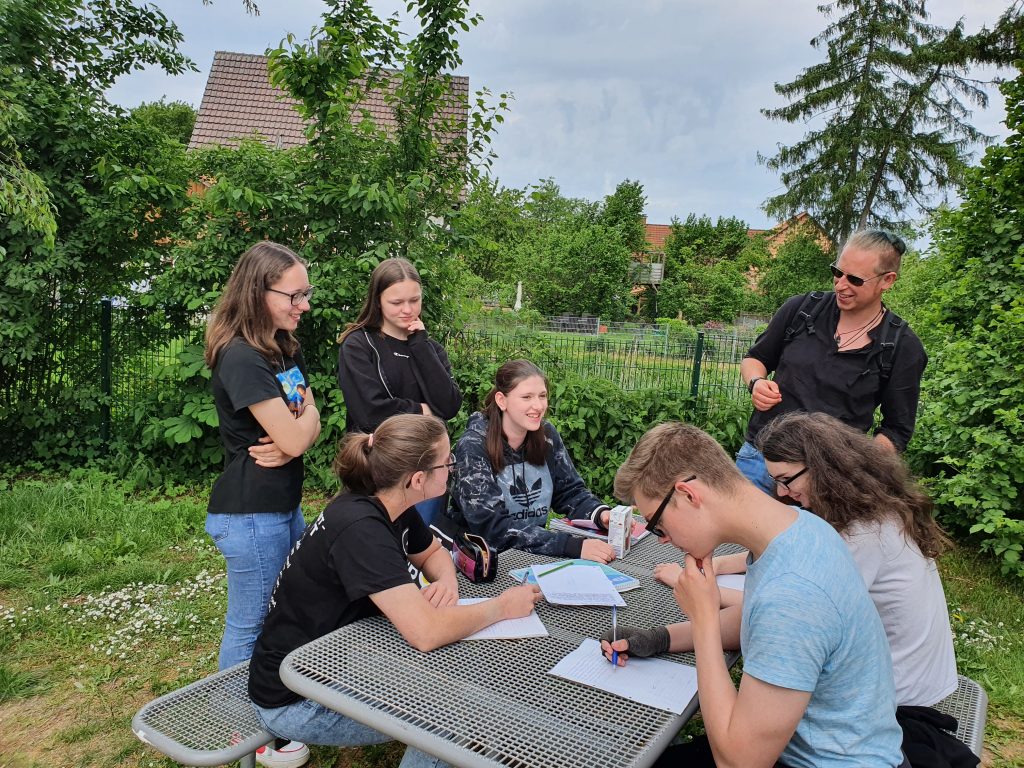
In today’s classrooms, educators are challenged to make learning both meaningful and action-oriented. One powerful solution is Design Thinking – a human-centred, problem-solving method that encourages creativity, collaboration and practical innovation. In the IL4SH project, we are exploring how Design Thinking can help teachers and students develop intergenerational learning (IGL) projects and citizen science (CS) initiatives that address real-world environmental problems.
Why Design Thinking?
Design Thinking is more than a teaching method – it is a way of thinking. By focusing on the needs of users (in this case, students, parents, grandparents and communities), it helps to design impactful projects that promote sustainability and bridge generations.
When used in intergenerational projects, it ensures that ideas are not only innovative, but also inclusive and environmentally meaningful. It empowers students to take ownership of their learning while engaging their families in collaborative, green action.
The 5 steps of Design Thinking in IGL and CS are
- Empathise: Start by understanding the concerns, knowledge levels and motivations of participants – both young and old.
- Define: Develop a clear problem statement that links an environmental issue to the intergenerational goals of your project.
- Brainstorm: Hold inclusive brainstorming sessions to generate creative, sustainable solutions that involve families and communities.
- Prototype: Translate ideas into tangible activities and experiments – such as small campaigns, tracking apps or household eco-challenges – that are simple and testable.
- Test: Pilot your project, gather feedback from participants, and refine based on real-world reactions and experiences.
Design Thinking has several benefits:
- Encourages creativity and innovation
- Builds collaboration between students and community members
- Sharpens problem solving skills
- Aligns well with STEM and environmental science curricula
Rather than designing each activity themselves, teachers facilitate the process, helping students to generate, test and implement their own ideas.
The result?
Engaged learners and real-world impact.
Looking Ahead: The IL4SH Toolkit
Our forthcoming Virtual Toolkit will provide a comprehensive collection of tools to using design thinking for intergenerational sustainability projects in schools. These resources will offer
- Design thinking tools
- Workshop templates
- Data collection tools
- Digital resources for citizen science activities
- Teacher support for implementing the method
Whether students are investigating laundry habits at home or biodiversity in their school, Design Thinking offers a flexible, powerful way to turn knowledge into action.